
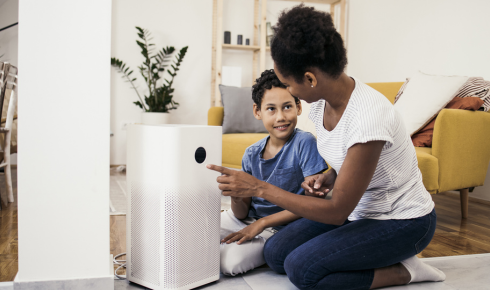


Let’s get one thing straight — if you’ve ever paused mid-scroll during an ad for an expensive air purifier, tilted your head, and whispered to yourself “Do I really need this?” — you’re not alone. The world feels increasingly hazy — sometimes literally — with pollution stats, allergy warnings, wildfire smoke alerts, and even your aunt texting about “toxic mold spores.” But amidst the noise, it’s worth having a candid, down-to-earth chat about air purifiers: what they do, who really needs them, and when it’s okay to skip the hype.
That Nagging Question: Do You Need Air Purifier Technology at Home?
Let’s not sugarcoat it — modern life is dirty. Invisible particles are everywhere: dust mites lounging in your mattress, pet dander floating around like confetti, cooking smoke lingering long after dinner. Heck, even your scented candles might be quietly releasing VOCs (volatile organic compounds, and no, that’s not a rock band).
So, do you need air purifier machines to tackle all this? That depends. If you or someone in your home has allergies, asthma, or other respiratory issues, then yes — having a solid air purifier with a HEPA filter can be life-changing. It’s not just about comfort; it’s about breathing without struggle. But if you’re healthy, don’t have pets, and live somewhere with clean air, you may not need one. You just might want one — and that’s a different story.
Marketing vs. Reality: Are We Being Scared Into Buying Filters?
Air purifier marketing has gone off the rails a bit. They promise to remove 99.97% of airborne particles, make your home smell like a lavender field, and even help you sleep better. That all sounds lovely, but here’s the truth: unless you’re in a pollution-heavy urban area, live with smokers, or have mold concerns, a $700 whisper-quiet unit with an app isn’t going to dramatically change your life.
That’s not to say air purifiers are a scam. Far from it. But let’s be real — do i need a air purifier for my one-bedroom apartment just because I live near a traffic-heavy road? Maybe. But maybe not. Open windows, vacuuming more often, and houseplants (yes, they help a little!) might do enough for your air quality without plugging in another device.
Allergies, Pets, and Dust: Where Purifiers Actually Shine
Now, if you own a dog that sheds like it’s his job, or if springtime turns your face into a faucet, we’re having a different conversation. HEPA purifiers are amazing at trapping allergens — pollen, pet dander, dust mites — the kinds of particles that wreak havoc on your sinuses or trigger asthma attacks.
And it’s not just about what you can see or smell. Your home could feel clean but still be full of microscopic junk floating around. In those cases, the do you need a air purifier question flips from “maybe” to “probably yes.” And hey, if your place gets that musty “old house” smell after it rains, a purifier with a carbon filter can help with that too.
Babies, Smokers, and Sensitive Souls
If there’s a newborn in your house, an air purifier can offer peace of mind. Their little lungs are more sensitive to airborne particles. Similarly, if anyone in your household smokes (or lives with the aftereffects of past indoor smoking), purifiers can reduce lingering pollutants.
And let’s not ignore those of us who are just… sensitive. Maybe you’re not officially “allergic,” but you wake up with a scratchy throat, your skin feels itchy indoors, or you get headaches after cleaning with chemicals. A decent air purifier could help lessen those subtle symptoms.
So in cases like these — yes, do you need a air purifier support? It might be more than just a luxury.
Not a Cure-All (Sorry)
This needs to be said: air purifiers aren’t magical dust-eliminating wizards. They don’t replace cleaning. They won’t solve a mold infestation. They can’t make up for poor ventilation. And — controversial opinion here — they won’t turn your chaotic life into a spa retreat just because they hum softly in the background.
But they’re great helpers. Think of them like a sidekick, not a superhero. If you’re already vacuuming regularly, keeping windows shut during pollen season, and have your HVAC system maintained, then an air purifier adds that extra 10% of effort.
What to Look For (If You’re Gonna Buy One)
If you’re now thinking, “Alright, I might give one a try,” cool. Here’s the quick buyer cheat sheet:
- Go HEPA or go home: True HEPA filters trap tiny particles (think 0.3 microns tiny). Don’t settle for vague “HEPA-type” wording.
- Size matters: Match the unit’s coverage area with your room size. A desktop model won’t fix a whole living room.
- Noise levels: Some are whisper-quiet, others sound like a box fan. Read reviews.
- Replaceable filters: Check how often they need changing and what that costs. Some replacement filters cost almost as much as the purifier itself.
- Activated carbon: If odours, smoke, or VOCs are your issue, carbon filters help absorb gases that HEPA filters can’t catch.
When You Probably Don’t Need One
Let’s save some people money, shall we? If you live in a rural area with fresh air, don’t have allergies, rarely get sick, and already keep your space clean — relax. You’re probably fine without one.
We sometimes buy things because they represent control. Control over our health, our space, or even the chaos of the world outside. But sometimes, a deep clean and a well-ventilated room does wonders too.
Still wondering, do i need a air purifier or is this a passing itch to splurge? You know yourself best.
Final Breath: Making Peace With (or Without) Purified Air
At the end of the day, whether you get an air purifier or not is about peace of mind. For some, it’s about reclaiming a bit of health and control in a world that often feels out of our hands. For others, it’s one more gadget collecting dust — ironic, right?
So next time someone asks “do you need a air purifier?” — maybe just smile and say: “Depends on how clean you want your invisible stuff.”
Because sometimes, it’s not about seeing the difference. It’s about feeling it.